

Wild Girl
When my hair hung
Like heavy ropes from my head
They thought that made me light.
"Hey, wild girl," the boys would say
"Come save me from myself.
I've been waiting for one just like you."
Almost verbatim, I promise.
Oh,
You had me so wrong.
Because the woman who wipes the mud and grass
From her feet
Before she paints her toe nails
Is unbearably heavy.
Like the pounding of the waterfall
The roots of the plant
The anchor of the ship
The weight of the lover
The child in the womb.
You wanted me to teach you to be free
And instead I made you
Face your fears
The emptiness you try to run from.
So I began again.
We women make our own initiations now.
Now I wrap my fairy tendrils
Tenderly
With arms burned by the sun
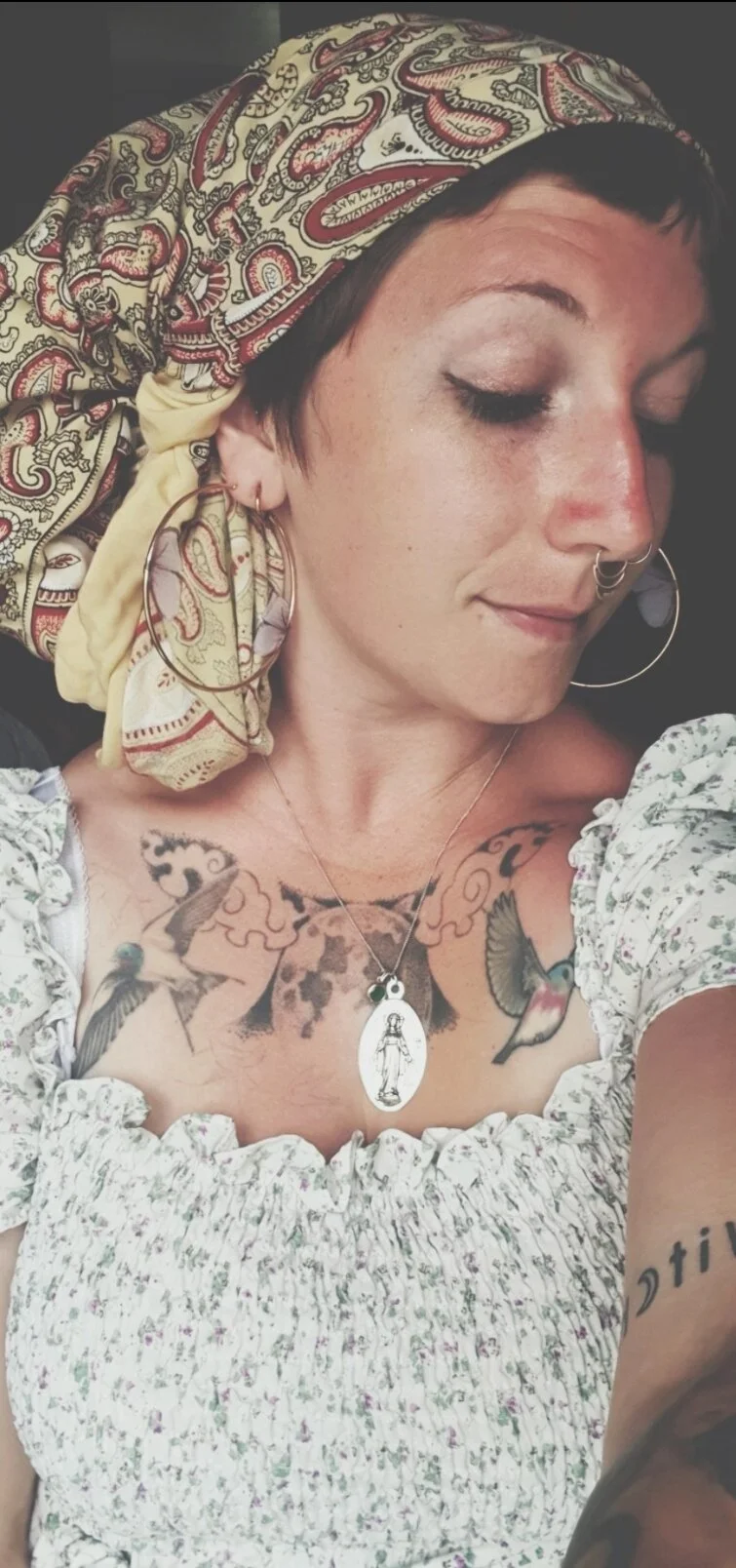
Crown myself wild woman
Not girl
And now you can look
But
Can't
Touch.
- Jenny Wren
Rhiannon as an archetype for birth trauma - story as medicine
Rhiannon as an archetype for birth trauma - story as medicine.
The story of the goddess Rhiannon in the Mabinogion has come into my thoughts many times recently as I now have been supporting women and listening to birth trauma stories for around 6 years.
After Rhiannon makes the sacred marriage with Pwyll (in the old days the Goddess would choose the king as custodian of her land), she bears him a son. The midwives wait until Rhiannon is sleeping and fall asleep themselves. When they wake the baby is gone, and in fear for their lives they smear Rhiannon with animal blood and tell everybody, including Pwyll, that she has eaten the baby.
Rhiannon's punishment is to physically carry people up a hill on her back, a punishment that she accepts until she is finally vindicated.
Historically and even today, infanticide is the worst thing women could be accused of. When we are working in birth and with birth trauma, it is vital to remember this genetic memory.
While the rulers of the Old Testament can kill as many babies as they see fit, for a woman to have an abortion, to be unable to bear children or have many children die at birth was to be viewed with suspicion and in worst cases killed as a witch. This is because the baby is seen as the property of the patriarchy, who decide who lives and dies.
You can see the ultimate projection - the accusation of infanticide placed on women when it is the male rulers who practice it.
When you work with women you often hear them say "I could never forgive myself if I didn't listen and something happened". When we unpack this belief we don't find that the woman genuinely thinks something will 'go wrong'. She trusts that her choices are best for her baby. What she cannot tolerate is the idea of being blamed by her family and the wider culture.
Ultimately it is the fear of her own death that she is prepared to sacrifice her health and happiness for, both socially and literally.
This is huge. This is ancestral. We have women voluntarily sacrificing their bodies because of epigenetic memory. Women with birth trauma will say "I knew it was wrong but I couldn't take the fear and the pressure" or like Pwyll, Rhiannon's husband who punishes her, "My partner let it happen and didn't advocate for me".
This fear generally is only resolved when a woman follows her instincts and intuition, does what she feels is right, and has a good outcome. Then she learns to trust herself implicitly.
In the story the midwives are terrified they will be blamed for the loss of the child. This explains obstetrics perfectly, a practice that cannot accept death, that sees nature and therefore women as dangerous and unpredictable, and consequently a litigation system that always wants somebody to blame.
Rhiannon accepts her punishment and in the story you can see the woman who is consequently shouldered with all of patriarchy's fears of death, birth, female sexual and bodily autonomy, and made to carry them, to her own detriment. Like Rhiannon, women carry this grief and shame with them for years until they find somebody to listen.
You see women with birth trauma blaming themselves. When Rhiannon finally meets her son again she renames him Pryderi which means 'sorrow', and it is a heartbreaking example of how what should be a sacred and joyous transition to motherhood is forever tainted.
Women can use the archetype of Rhiannon to help them to believe they were not to blame, that they are only responsible to themselves and their babies, they can reject the fears and suspicions of the patriarchy that do not belong to them.
With love xxx
My Grannies Were Witches
My grannies were witches
And my dad sprinted from one matriarchy
To another.
It's no wonder I turned out like this
When where I come from
Women rule.
Winnie the white cursed her husband
Her jailer
With urine from the chamber post
As he sat in a drunken stupor
"It's raining!" He exclaimed.
She was turned away
From a women's refuge
Who thought a violent husband
Was a home.
He died abruptly
And when she was asked
How long he'd been dead
She said "Not long enough".
All folk said
She was canny
A witch.
My granny Marion
Left her very first baby
And sold her breastmilk
As if to say, the only one
Who profits off my commoditization
Is me.
She left this reality eventually.
Yelled incantations and curses down the phone
Saw and heard things
That nobody else could see
Thought medicine was poison
A belief which ended her life.
Why am I still so scared?
They say blood never lies
And I smile Winnie's smile
My spells and my blessings for
Mary, Marian, Marion
My spite and my rejection
Of what is expected of me
My life has become a conundrum
Of
Which
Witch?
- Jenny Wren