

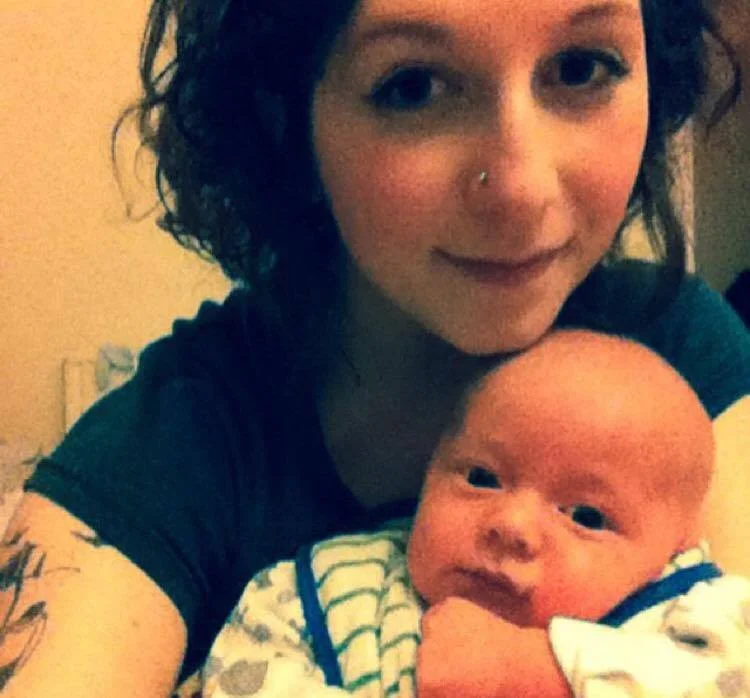
You Made Me A Mother
Judah is difficult to put to bed tonight. He's tossing and turning, standing on his head, asking for cuddles, resting his head on my shoulder. Gazing into my eyes, I close them, he examines the lids to see if they flicker.
Our eyes lock. His searching, roving over my face. Mine intent on his. My thoughts begin to hum in my head.
Judah, I think,
You were so very wanted.
You began as a dream, then formed, a spark of life. You inhabited my body, then soft and blemish-free, delicately patterned. My hair hung long then, I was so very young. Wide-eyed and innocent and full of the joy that you were growing in me.
You took me, and you made me a mother.
I drifted through pregnancy in a dreamy daze. We took long naps together, we rode a bicycle in the spring sunshine. We read for hours in the garden in Elm street, novels of hope and love and inspiring things. We cuddled cats and went second-hand shopping for the things that you would need.
As you grew, I would sometimes get looks and comments, I hadn't realised how young I did look. I began to deflect these things with an almost imperceptible hardening of my spirit, an antithesis to my naive heart. One of my first experiences of being judged. I see now, this beginning of hardening was essential to becoming your mother.
You made me learn. You expanded my mind. I became fascinated with your progress, the effects your birth would have on you, on us. I wanted our meeting to be as beautiful and powerful as I knew it could be. I prepared, I learned, I grew. You grew. The inklings of another dream began to inhabit my subconscious and grow, just as you inhabited the womb,
I birthed you, in a heady baptism that swept through my mind and body and left all traces of my old self behind. I saw the past and future reflected in the surges that pulsed through us and we found our release in the depths of the water. We joined the history of all mothers and babies throughout time who had made this journey together. You made me a mother.
You were new, I fed you from my body, held you close when you cried, watched you while you slept. I learned the indignity of motherhood, the mammalian reality. The sweat and the milk and the blood. The purple lines like tree branches arching over the curves of my stomach, the evidence that you had made me your home. I re-examined my ideals of artificial beauty and found a new meaning in being your mother.
I loved you instinctively, without reason. The smell of your head. My pride in your accomplishments, my happy boy. You surveyed the world from your safe spot on my chest, then later my back. We explored the world together. I wanted to show you high mountains and deep forests, wanted you to smell the sea and feel the sun on your face. The world gained new meaning when I became your mother.
You gave me a dream and a strong desire to help. No longer could I separate myself from the beautiful intricacies of birth and motherhood. The work I do brings me a fulfilment like no other. You inspired me.
Then one day, you spoke so innocently, my casual observer to the depths I had allowed my life to become. I knew then you deserved better from me. You saved me.
You transformed me.
Thank you for choosing me to be your mother.

Freebirth and the doula
The choice to freebirth is a controversial one within the current maternity care system. Freebirth is when a woman plans to and subsequently gives birth without the assistance of trained medical professionals.
There is a lot of misconception surrounding freebirth, usually many people including professionals believing it to be illegal. In actuality, accessing maternity services during pregnancy is optional. In our time of intervention and technology in childbirth and our rising caesarean section rate, a time where women expect to go to hospital and hand over their agency to the medical team, freebirthing is seen as the other extreme.
Unlike birth before arrival or pregnancy concealment, a woman who freebirths is consciously choosing not to use the maternity care services available to her. However, they may choose to have a “lay birth supporter”, in other words, birth partner or doula.
The current controversy surrounding freebirthing has a big impact on a doula’s practice as they must seek out all relevant information and make a decision as to whether this is something they can support as a birth worker and then incorporate into their personal ethos.
A lot of the research has been done with women in America and Australia, where the maternity care system is very different, not being free or midwife-led. It is easier to see why a woman would refuse medical care if there was a big hospital bill attached or risk of increased medicalisation due to being under the care of an obstetrician. Therefore we need to look at why women in the UK, with a free, easily accessible and midwife-led service choose to refuse this care. The research interviewed women on their reasons to freebirth and drew conclusions as to their main motives.
The World Health Organisation’s standpoint on freebirth is that all women need professional care during childbirth as 10-15% of births will need obstetrical intervention and most deaths occur around the time of birth and within the first 24 hours. The World Health Organisation is the leading authority on these matters and their opinion is very relevant. As birth workers and women we can have the fundamental belief in the body’s ability to birth. We can recognise that many complications are caused by over-medicalisation and ignoring the basic physiology of birth. We cannot ignore, however, that there is always risk present in birth and when these problems occur they do require intervention as there can be fatal outcomes for mother and baby.
Our current maternity care system has left women feeling disillusioned and unsafe which was the key reason for opting out of services. It is my belief that women who choose to freebirth do indeed feel unsafe within the current care model. The motivation to freebirth is often the fear of medicalisation of birth rather than the act of giving birth itself.
The philosophy of woman-centred, individualised care is not being offered, even if that is what they are supposed to follow. This supports what I have been led to believe, that within a hospital women are assigned a risk-factor and their care is planned accordingly, rather than actual personalised care. Women often have to bargain and negotiate for the birth they want, causing untold stress and anxiety. It is easy to see why women choose to opt out altogether.
Another important reason for freebirthing is that it helps create the right birthing space to support the natural progression of childbirth. This is a really important point as we know that the hormone oxytocin facilitates labour. This hormone can only be truly effective if a mother is calm, relaxed and in the environment she wants to be in. If a mother wants to birth alone and this is what is most likely to give her labour the best outcome, it should be supported as a valid choice. What is apparent is that women choose freebirth in order to stay in control and retain their autonomy during what is a vulnerable time.
When we consider freebirth, if over-medicalisation of the birth process is what women fear about going to hospital, why not home birth instead? The choice of women who are considered “high-risk” to home birth is often met with opposition by the midwives involved in her care. This is related to professional indemnity insurance, whereby a woman is able to sue a midwife should the birth outcome result in a child with a disability. These outcomes are rarely ever the fault of the birth attendant although the compensation gained can help the child with the possibly lifelong care they may require.
This is an example of our litigation culture which is influenced by the United States and the way they handle medical negligence claims. With something as emotive as birth and outcomes for the child, parents are encouraged to sue to get money to improve their child’s lifestyle. It is logical to conclude that midwives would be reluctant to attend a home birth where they deemed the risks too great and their accountability might be exploited for financial gain. This is relevant to maternity care in the UK as we do not currently a no-fault compensation system in place. This would greatly relieve pressures on midwives and allow them to support every birth without fearing litigation as much. Therefore a woman who is not supported by her maternity care provider to home birth may well look to freebirth as an alternative.
Women who have felt rejected by the NHS can sometimes choose to engage independent midwives. However, insurance for an independent midwife is difficult to come by and often means that the midwife is not covered for the type of birth the mother wishes to have. As all healthcare professionals are required to carry professional indemnity insurance there is a concern that independent midwives will be unable to practice and support these mothers. Without this way of getting the support that they need from a midwife, we can see it will lead to more women choosing to freebirth.
This calls into question the duty of care that midwives have, that “the needs of the woman or baby are the primary focus of her practice”. If midwives are refusing mothers their right to place of birth, that goes against that mother’s needs. This is alienating women from medical care and sidelining them into freebirthing which may not be what they actually want. The choice to birth alone should be made from a place of confidence and not fear. Fear and anxiety from having to fight for one’s birth choices and ultimately make a decision that she is not completely happy with cannot have a positive impact on the birth experience. It could negatively affect the hormonal physiology of labour which can lead to poor outcomes.
Requiring midwives to have professional indemnity insurance and supporting every woman to give birth where they choose are contradicatory. Without no-fault litigation we are going to have midwives uncomfortable supporting home birth and not attending. This is going to increase the amount of women seeking a freebirth which they may not truly want. This is not what maternity care should be like and is a poor offering to women.
The role of midwife has split into that of midwife and doula, and some women are choosing only a doula with no medical assistance. This is in response to rising intervention rates that have made women afraid of the medical model of care. Fear of unnecessary intervention and not being able to find a care provider willing to support their birth wishes has alienated these women into choosing freebirth. Home birth is often referred to as a “casualty” of the maternity care system which is an interesting way to view it. As technological advances improve, home birth has become somewhat unusual and the model of insurance and litigation has made it difficult to reintegrate into maternity care.
It is interesting to delve deeper into the issues surrounding home birth, the way society believes it has ownership over pregnant women’s bodies, the position of women in society and the social versus biomedical model of care. It also comes down to power relationships between the woman and care provider. I think we can confidently assert that the paternalistic medical system assumes control over women’s reproductive abilities and uses the emotive aspect of childbearing to influence women in their choices. It exploits the mothers wish for a healthy baby, even if it is at a cost to herself.
As society is so invested in these babies and subsequently children, the mother’s autonomy is often not highly regarded. Frequently women do not even know that they have choice when looking at place of birth. The reason that homebirth and consequently freebirth are so controversial is that it involves women reclaiming ownership of themselves and rejecting the medical model of care as designed by obstetricians.
Often the reason for choosing to freebirth is having had a previous traumatic experience. This has caused a lack of faith in the medical system and fear of repeating the experience. The woman might have feelings of anxiety attributed to that particular hospital which would deter her from birthing there again. Women with these feelings particularly need help to work through their previous birth experience and heal instead of being maligned into birthing alone, which may not be in their best interest or what they truly want. It is a choice made out of desperation and trying to regain control by any means.
A compelling for freebirth is confidence in the birth process and the belief the woman is able to look after herself. This is an important distinction to make with the previous one and something that I have long thought. Freebirthing women can be split into two categories, the first being those who make the choice from a place of fear and lack of support. The second category are those with complete faith and confidence in the birth process and know they can manage alone without medical assistance.
These two different types of women are facing very different situations and will require different support. I would argue that the term ‘freebirth’ to cover all birth without medical assistance is not useful when exploring these complex issues. It cannot simply be used as an umbrella term when the differences in these women’s circumstances are so stark. They are not the same at all. It would perhaps be better to call one an empowered freebirth and the other a disempowered freebirth to reflect the emotional state of these women and how they came to make the decision to birth alone.
The doula’s role in freebirth is becoming more popular, and often tensions between midwives and doulas are growing in a fragmented maternity care system that is unable to provide continuity or woman-centred care. It seems that doulas are providing this continuity and making women feel safe when the time comes to birth their babies, freebirth being one of those times they are called to offer support when a woman has made a conscious decision to decline medical assistance.
We can contrast the active choice to freebirth with accidental out of hospital delivery, or birth before arrival. These are two separate issues as freebirth is the choice to birth without assistance and birth before arrival is when the mother plans to either birth at home, in a birth centre or maternity unit but the baby is delivered before she is able to travel or notify anybody of the impending arrival. They are represented separately statistically and should not be confused. Freebirth is an active choice.
The Royal College of Midwives issued a statement, which is that they cannot endorse freebirth and there is not enough research into the safety. While it is obvious that they would not support freebirth as it makes their role irrelevant, it does pose an interesting argument. When discussing choice in childbirth, particularly place of birth, women need statistics and risks to make an informed choice. As a doula and childbirth educator, informed choice is at the heart of what we do in giving the birth process back to women. Freebirth is a relatively new phenomenon and as such we lack statistics to really give this informed choice to women. From trying to research freebirth myself, he lack of information available was immediately clear to me. This makes the choice to support a freebirth so much more controversial for a birth worker.
To reduce freebirth, the RCM that suggests midwives need to work one-to-one with women to ensure continuity of care and building a good relationship. This is a good idea in theory but it rarely occurs in real life. Often it is midwife shift changes that are problematic in labour. If mothers have built up a rapport with their first midwife and have to get acquainted with a second it could affect the progress of their labour. This is where doula support is so vital to women.
One important point to consider is that the statistics on freebirth are so hard to find because these women are deliberately disengaging from medical assistance. There are online freebirth communities where discussions are thriving and point to a growing trend, women supporting women and peer support. It is interesting that many of these women frame their experiences as birth before arrival when interacting with medical professionals to avoid the connotations of freebirth. Whereas one could call this empowered freebirth, to me it still has the sense of complying with a paternalistic medical system and undertones of fear when you must rewrite your experience in such a way.
Some couples prepare for potential emergency situations by looking at risks and how to manage them if they do occur. A freebirthing woman and her partner are often very informed about the birth process and understand when medical attention must be sought or prepare themselves through resuscitation techniques or online research.
One proponent of freebirth declares that childbirth is an unknown, and although some unassisted births will result in the death of the baby, so will some hospital births where this death is caused by unnecessary intervention. This is a choice mothers need to weigh up while accepting that birth is unpredictable. While we do not have statistics on freebirth, the evidence is that currently 15% of births require intervention. Interestingly, the freebirthing advocate points out how many of these complications are caused by the overall health of the woman and how many are actually caused by intervention.
The role of the doula in supporting a freebirthing woman is complex. The doula must first ascertain her comfort level and whether they feel confident in supporting this birth. Each woman and situation is different, so whether a doula clearly states that she is unable to support this kind of birth or decides that she is willing to consider it is important. As birth workers, doulas encourage women to birth in the way that feels right to them and assist women in finding evidence and information to make informed choices. It is usually the medical care providers that are the ones to put up barriers and use guidelines to try and get women to follow the medical model.
Care providers can be unsupportive of a woman they consider “high-risk” in attempting to home birth, for example. As we have learned, this can drive women to extremes such as freebirthing. These kinds of attitudes that fail to see the woman holistically, can alienate women from their care providers. Doulas are able to support women unconditionally.
It does seem interesting then that when it comes to freebirth that doulas are often the ones to declare their discomfort or inability to support this kind of birth. Surely then this means that such a clear distinction between the role of doula and midwife cannot be drawn. Both are adhering to guidelines and boundaries, whether those are personal and professional. Both are therefore unable to fully support a woman in her decision making. This goes against what many people believe doulas should do, which is offer unconditional support and believe in the woman’s ability to birth.
Often medical professionals are criticised by other birth workers for not fully supporting women’s choices and preventing them from making a true choice. A doula is supposed to offer that unconditional support but it is becoming increasingly common for doulas to make a decision regarding their own limits and comfort level.
The difference between empowered freebirth and disempowered freebirth may be the reason a doula considers freebirth on a case by case basis. The hormone that fuels labour and contractions, oxytocin, can only thrive when a mother is calm and relaxed. Every doula knows this and that her main role is to support the woman’s production of oxytocin by creating a safe environment.
I would argue that a mother who has reached the decision to freebirth from confidence in her own body and a sense of empowerment is likely to have a good supply of oxytocin in labour. This will accelerate the progression of the labour and trigger release of endorphins which provide pain relief and allow her to relax further and make the sensations of labour more comfortable.
However, a mother who is disempowered, maligned and freebirthing from fear may not have such a good outcome as an empowered mother. That sense of fear and anxiety may inhibit her production of oxytocin and instead adrenalin may be released in the body. This can cause labour to slow down or stall and also cause the sensations of labour to feel more intense as her tension inhibits the working muscle of the uterus.
It is logical to conclude that a doula would be happy to support the first scenario but not the second. A mother freebirthing as a last resort may not be a client the doula wishes to take on. Perhaps in this case what the mother needs is help working through birth trauma or help with advocacy and negotiating care. The doula must also consider her role at the labour and where she stands legally. It is illegal for anybody unqualified to act as a midwife. This means that a doula is able to attend a birth to support the woman but cannot undertake any clinical tasks. When it comes to freebirth this could become difficult to distinguish and both doula and mother would need to be clear about their expectations of each other. The doula would not wish to put herself in a situation where she felt uncomfortable or that she had been substituted for a midwife.
It is clear that women freebirth for many reasons and will continue to do so as the medical model fails to meet their needs. A doula’s role is to decide what part she will play in the growing movement and whether there is enough evidence for her to make an informed choice. It also means deciding whether she truly believes in a woman’s ability to birth her baby unaided, despite the risks. As doulas are independent this will vary between professionals and the woman who seeks to freebirth must find the doula compatible for her needs.
References:
Buckley, S. (1999). Pain in Labour: your hormones are your helpers. Australia’s Parents Pregnancy
Dahlen, H.G., Jackson, M. and Stevens, J. (2011). Homebirth, freebirth and doulas: Casualty and consequences of a broken maternity system. Women and Birth, 24(1), 47-50
Kirkham, M. (2012). Rights, responsibilities and insurance: Changes and contradictions around home birth. Midwifery Matters, 135(17)
The World Health Organisation. (2004). Making pregnancy safer – The critical role of the skilled attendant
Feeley, C. and Thomson, G. (2016). Why do some women choose to freebirth in the UK? An interpretative phenomenological study. BMC, 16(1)
Lynch, E. (2007). Do-it-yourself delivery. Nursing Standard, 22(3)
Shanley, S. (2012). Unassisted Childbirth. California: ABC-CLIO
Vogel, L. (2011). “Do it yourself” births prompt alarm. CMAJ, 183(6)
Unassisted Birth: The Legal Position. (2016, January). Retrieved June 21, 2016 from http://www.birthrights.org.uk/library/factsheets/Unassisted-Birth.pdf
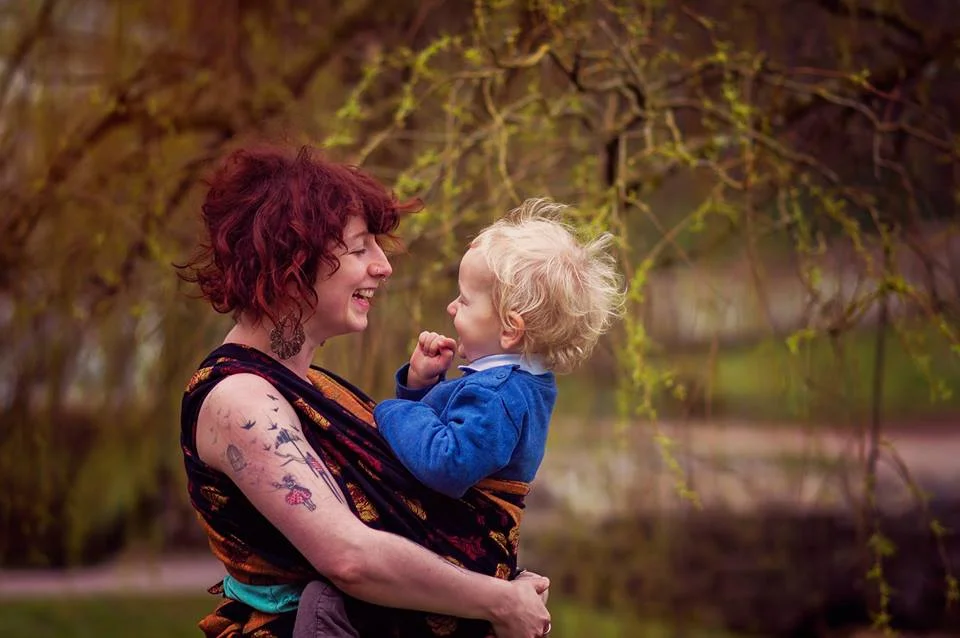
How I Got My Son to Sleep Through the Night
I am a baby class teacher - positive touch and fourth trimester education. I regularly encounter mothers who are desperate for their little ones to 'sleep through', whatever that means. It can be hard sometimes adjusting expectations to newborn behaviour but I try.
When my son was born I quickly realised that sleeping apart was not going to work. Breastfeeding a newborn on demand would have turned me into a zombie very quickly had I not been able to just latch him on and drift back off into that intense, high quality sleep breastfeeding mothers manage to accumulate in between night feeds.
I loved having him in bed with me. The way he would seek me out during the night and contentedly drift off in my arms. The way we would both accidentally sleep in on occasion and wake up dozy yet refreshed. The more research I did into sleeping the more it seemed to make sense. We as adults do not sleep through the night, we wake up, turn over, sip water, cuddle into each other. Babies are no different and when they are born have a stomach the size of a marble that needs to be filled little and often. In evolutionary terms, a baby who slept apart from a caregiver was in big trouble.
For little babies, sleeping next to a caregiver is essential to survival. Our breathing triggers their breathing, our heart rate stabilises theirs, we provide warmth and comfort. One of the risk factors for SIDs is putting a baby to sleep in a separate room for these reasons.
The advantage I had with having Judah in bed with me is that I was synchronised to his sleep cycles. I would be awake before he had a chance to stir and cry and soothe him before he completely awoke. There were nights that were hard - teething, growth spurts. There were nights I wanted to pack it in and had to conceal from health professionals we were bedsharing. Some nights I just wanted my boob back, wanted my space back, wanted my life back.
One of the hardest lessons to learn as a mother is that the life you had before is never coming back. The hard days and nights when you're touched out and you've had enough. It wasn't actually about the sleeping. It was the constant accommodation and sacrifice. Then remembering, I wanted and loved this child and what is best for him is not always what is most convenient for me.
I have long been an advocate of gentle parenting, particularly when it comes to sleep. New parents swiftly realise that parenting is a twenty four hour job which can be a bit of a shock. They're tired, they need a break, they want the night to escape from their baby and rest, they want to know how they can get these little ones to stop seeking comfort and food in the night.
There is a lot of research done as to what happens to the brain when a baby is left to cry. Although I would not categorically say that sleep training will affect that particular baby's brain, what it teaches babies is that nobody comes when they cry. Little babies that have not even learned object permanence think that when they cannot see you then you are gone forever. They think they have been abandoned. That legendary "self-soothing" is actually a baby passing out from being tired and internalising its own needs. This can have consequences for their relationships with others as adults and can even affect their digestion. Hearing your baby's cry and not responding trains the parent to become colder and less responsive to their child and has implications for their relationship.
We as a culture are becoming less touchy-feely, less empathetic, seeking comfort from things rather than people. Internalising our problems, leading to mental health issues. I have long suspected these things are linked to how we respond to our children during the night time.
Interestingly, the nights I was most frustrated with my son were the times I would find out that he was actually ill, or growing fast, growing teeth or learning a new skill. Babies who are sleep trained often need to be "re-trained" at many different stages in their development.
Being the teacher, I am often looked to for 'methods'. If you're reading this to try and get some magic tip or trick that will make your baby sleep then that's not what I'm going to give you.
I did get him to sleep through. Judah has been sleeping through the night (8pm-6am) for the last few weeks. He is 2 1/2 years old. I truly believe that developmentally he was not ready to sleep through until very recently. It really hit home to me how unreasonable we are to expect this kind of development from newborn babies. The advantage I have is that Judah now understands what he is told and I explained to him that when he woke up the milk would be sleeping but he could have water if he wanted to. On the first two nights he had a little protest and then cuddled back to sleep. Now he does not even care to wake.
I want to be able to say that I feel different, amazing from more sleep. I actually don't feel much different. I feel happy and relieved that I was able to wait and let him grow and develop on his own while responding to his needs. Every decision we make as mothers is fraught with doubt and it can be hard to see the future when the present is so demanding and difficult.
It may take children even longer than this to develop the true ability to soothe themselves back to sleep. The most important thing to remember is that they don't learn it from being left to cry, they learn it from a loving caregiver showing them how until they are ready to do it themselves, just like any other skill.
So how did I get him to sleep through?
I was always present, always caring, always responsive. A child that is secure that their needs are going to be met is less anxious and is able to develop the confidence and ability in their own time.